
In Sonoma County, between the annual reality of wildfire season and the ongoing challenge of Public Safety Power Shutoffs (PSPS), our local grid is put to the test every year. For many homeowners, the goal is straightforward: reliable power that keeps the lights on, the food cold, and the home running comfortably when the grid goes dark.
The solution often starts with a home battery, which is sometimes sold as the magic bullet that makes the failing California grid a thing of the past. But true resilience isn’t built on “magic.” It’s built on math.
In reality, a home battery system is a precision tool. To achieve actual energy security, the kind that gets you through a 2-3 day outage without disruption, you need to understand how much energy your home requires and how a properly designed system interacts with that load.
Whether you’re looking to power only your essential devices or you want to maintain your standard of living during an extended shutdown, the difference between a system that falls short and a system that performs lies entirely in the design. Let’s break down the math behind your home’s energy needs and what it actually takes to build a system that stands up to the next outage.
The Baseline: A 13.1 kW "Bucket"
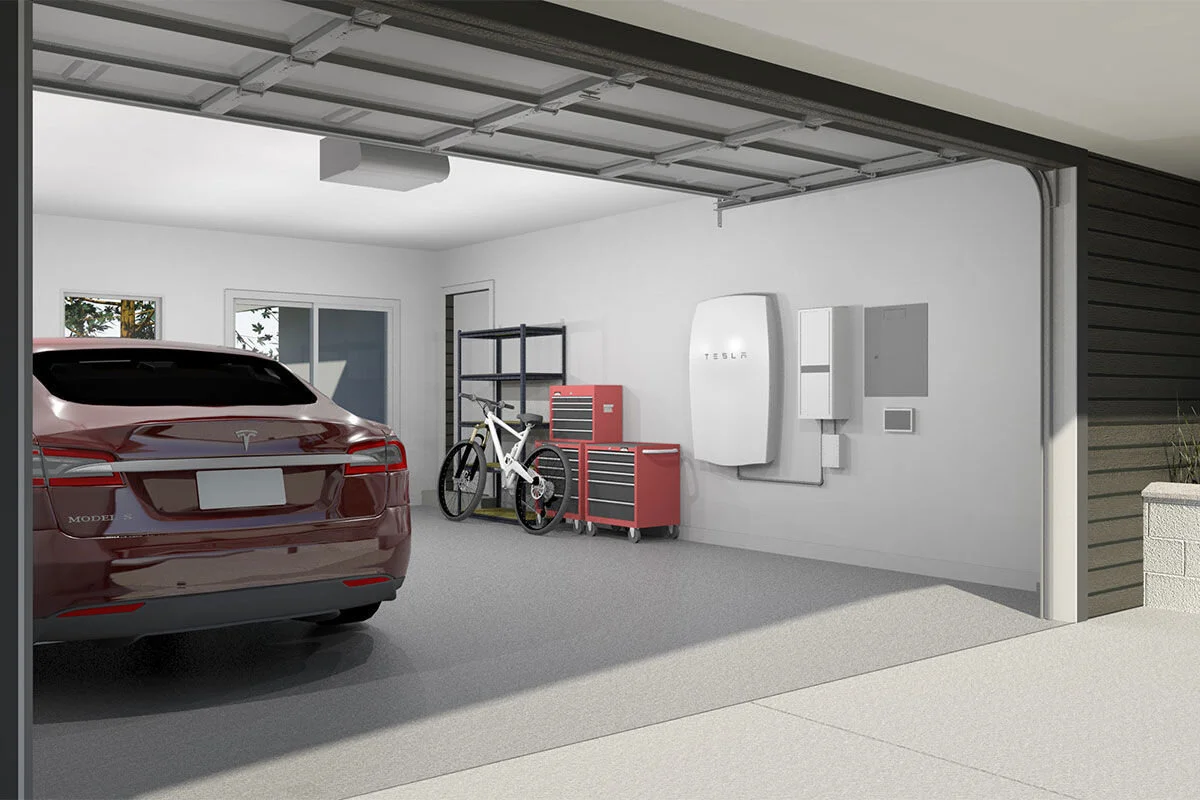
Most modern home battery systems (like the Tesla Powerwall, which we frequently install) offer roughly 13.5 kWh of usable capacity.
Think of that 13.5 kWh as a bucket of water. If you only use a little bit at a time, the bucket lasts all day. If you open the floodgates, it’s empty in a few hours. When the grid goes dark, that bucket is all you have until the sun comes up to refill it.
Scenario 1: Essentials-Only
If your goal is to survive a multi-day outage without losing your quality of life, you need to be strategic. By focusing strictly on essentials (like the refrigerator, LED lights, internet, a few outlets for charging phones and laptops), you can make that 13.5 kWh stretch.
Estimated Duration: 12–24 hours (depending on fridge efficiency).
The Logic: These items have a "low draw." They sip power. If you are diligent, a single battery can keep the lights on and the food cold for a full day.
Scenario 2: High-Load Reality
This is where the marketing often falls short. Many Sonoma County homes are now "all-electric." If you are running an air conditioner, a heat pump for heating, or an electric stove during a blackout, you are opening the floodgates of higher-demand devices (even if they are considered efficient).
Estimated Duration: 2–4 hours (or less).
The Offenders: Heat pumps, electric water heaters, and well pumps are massive power consumers. They don't just sip power; they gulp it. If you try to run your whole home, including heavy-duty appliances, that battery will drain rapidly.
Appliances That Drain Your Battery Fastest
If you are designing a system for backup power, you need to know which appliances are the biggest risks:
Well Pumps: Common in rural Sonoma County. These have a high "startup" load that can strain an inverter and eat into capacity.
Heat Pumps/HVAC: The biggest single draw in your home. Running them constantly during a winter outage or summer heatwave will deplete a battery rapidly.
Medical Equipment: If you have CPAP machines or other vital medical gear, these must be accounted for in the system design. They are non-negotiable essentials.
Electric Oven/Dryer: These are rarely viable to run on a battery backup system due to their intense power draw.
Can Your Home Stay Powered Through a 3-Day Outage?
One of the most common questions we hear is:
"Can a battery keep my home powered for three days during a wildfire-related outage?"
The good news is that it absolutely can—when it's designed as part of a complete backup power system.
A battery stores energy, while solar panels generate new energy each day. By pairing a properly sized battery with a well-designed solar system, your battery can recharge during daylight hours, providing the energy needed to extend backup power through multi-day outages.
Think of your battery as a water tank and your solar panels as the well that refills it each day. As long as the system is properly designed and there's adequate sunlight, your home can remain powered well beyond what a battery alone could provide.
That's why we design every backup system around your home's energy needs, ensuring your solar and battery work together to provide reliable power when you need it most.
Proper Design vs. Cookie-Cutter Installs
This is why Taylor Energy differentiates itself from the big national solar corporations. Proper design is about load calculation. We analyze what is actually in your home, your EV charger, your heat pump, your well pump, and we size the battery capacity (and the solar array to fill it) to match your lifestyle. Every home in Santa Rosa, Petaluma, Windsor, and Sebastopol is different. There is no one-size-fits-all approach to backup power.
If you are worried about grid instability and want to know how to build a system that actually works when the power goes out, let’s run the numbers. We’ll show you exactly how much capacity you need based on your specific appliances and usage.
Let’s design a system that protects your home. Schedule your free solar assessment today.
Residential Solar

Get a free estimate for residential solar panel installation in Santa Rosa, Petaluma, Sebastopol, and surrounding areas. We are a Tesla Powerwall Certified Installer!
Rebates & Incentives
Save on your solar panel and solar battery installation with California solar incentives. Schedule a free solar consultation with Taylor Energy to learn more about the incentives you’re eligible for.
Commercial Solar

Cut operating costs and increase profit margins with commercial solar panels. Schedule your free commercial solar consultation with Taylor Energy today. We can help you find a solar solution that works for your business.